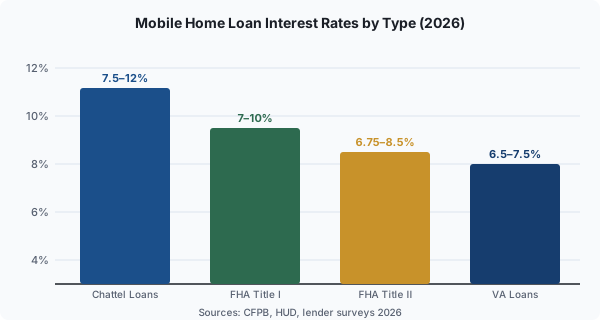
If you're shopping for a manufactured home loan in 2026, expect to see rates roughly 1 to 4 percentage points higher than what a buyer of a site-built home would pay. Chattel loans, the personal-property financing most common in mobile home communities, typically run 7% to 12%. Real property mortgages, the kind you get when you own your land, run more like 6.5% to 8.5%. Those ranges are wide because four different things shape your specific rate: the loan type, your credit score, how much you put down, and which lender you talk to.
This guide breaks down what's available right now, explains why the rates look the way they do, and gives you an idea of what you can actually change before you apply.
What Are Current Mobile Home Loan Rates?
In 2026, rates for manufactured home financing split into several categories depending on how the home is classified:
Chattel loans (personal property): 7.5%–12%
These are the most common loans for homes on rented lots. They're unsecured by land, which makes lenders charge more. Borrowers with credit scores in the 650–700 range typically see 8%–10% rates; scores above 720 can land closer to 7.5%.
FHA Title II mortgages (real property): 6.75%–8.5%
If your manufactured home is permanently affixed to land you own, FHA Title II rates are substantially better. These follow standard FHA mortgage pricing, which tracks the broader 30-year fixed market with a small premium for manufactured homes.
VA loans for eligible veterans: 6.5%–7.5%
The Department of Veterans Affairs guarantees loans for manufactured homes that meet VA property standards. Rates are competitive — often the best available for qualifying buyers.
Fannie Mae MH Advantage / Freddie Mac CHOICEHome: 6.5%–7.75%
For homes meeting specific architectural and construction standards (site-built features, pitched roofs, etc.), these GSE programs offer near-conventional rates. Not all manufactured homes qualify.
Conventional chattel (land-home packages): 7%–9.5%
Dealer-arranged financing or lenders specializing in chattel loans. Rates vary widely; always compare at least three offers.
Use our mobile home loan calculator to run payment estimates at different rates and see how a 1% rate difference affects your monthly cost and total interest.
Why Manufactured Home Rates Run Higher Than Conventional Mortgages
The gap isn't arbitrary — it reflects real risk factors lenders price into their offers.
Depreciation risk. Unlike site-built homes, manufactured homes — especially those on rented land — can depreciate in value. If a borrower defaults and the lender forecloses, recovering the full loan balance is harder than with a site-built home that appreciates over time.
Shorter loan terms. Chattel loans max out at 20 years vs. 30 for a conventional mortgage. Shorter amortization means less time for the lender to collect interest, so the rate has to be higher to make the loan profitable.
Smaller loan sizes. The average chattel loan is around $70,000–$120,000. Smaller loans cost lenders almost as much to originate as larger ones, so they charge higher rates to cover overhead.
Limited secondary market. Most chattel loans don't get sold to Fannie Mae or Freddie Mac, so lenders hold them on their books. That means they need to price in more risk directly.
If you own the land and can convert your loan from chattel to a real property mortgage, the savings are significant. See our chattel vs. mortgage comparison for a full breakdown of what that difference means in dollar terms.
What Affects Your Individual Rate
Two borrowers financing the same $100,000 home can receive quotes 3–4 percentage points apart. Here's what drives the spread:
Credit score drives more of the rate than anything else. Lenders bucket applicants into tiers and price each tier separately:
- 760+: Best rates, typically 7.5%–8% on chattel loans
- 720–759: Good rates, roughly 8%–9%
- 680–719: Moderate rates, 9%–10.5%
- 640–679: Higher rates, 10%–12%, or limited options
- Below 640: Very limited lenders; rates often 11%–13%+
Down payment matters almost as much. A 20% down payment signals lower default risk and often reduces your rate by 0.5%–1%. FHA Title I allows 5% down; many chattel lenders want 10–20%.
Loan term. Shorter terms (10–15 years) sometimes get slightly better rates because the lender's exposure period is lower. But higher monthly payments offset the rate advantage for many buyers.
Home age and condition. Pre-2000 manufactured homes, and especially pre-HUD Code homes (pre-1976), are harder to finance and often carry higher rates or can't be financed at all. Newer homes in good condition — particularly those built to more recent HUD standards — get better terms.
Lender type. Credit unions, specialty manufactured home lenders (21st Mortgage, Triad Financial Services, Cascade Financial), and FHA-approved banks all price differently. Shopping three or more lenders is essential.
How to Get the Best Rate Available
You can't change your loan type overnight, but several moves can improve your rate offer before you apply.
Check and improve your credit score first. Pull your credit report from all three bureaus at annualcreditreport.com and dispute any errors. Paying down revolving balances below 30% of their limit can add 20–40 points within 60 days.
Save a larger down payment. Going from 5% to 15% down doesn't just lower your loan balance — it often moves you into a better rate tier. On a $100,000 home, adding $10,000 to your down payment might save you $50–$100/month in interest.
Compare lenders aggressively. Get quotes from at least three sources: a specialty manufactured home lender, a credit union, and an FHA-approved mortgage company. The range between the best and worst offer for the same borrower can easily be 2%.
Ask about MH Advantage or CHOICEHome programs. If the home you're buying meets Fannie Mae or Freddie Mac construction standards, these programs offer rates that compete with conventional mortgages. Dealers selling qualifying homes will know if their inventory qualifies.
Consider a shorter term if you can afford it. A 15-year chattel loan often carries a slightly lower rate than a 20-year, and the total interest savings are dramatic. Calculate your payment at different terms to see the trade-off.
What a 1% Rate Difference Actually Costs
On a $90,000 loan over 20 years:
- At 7.5%: Monthly payment ≈ $726; total interest ≈ $84,100
- At 8.5%: Monthly payment ≈ $782; total interest ≈ $97,700
- At 9.5%: Monthly payment ≈ $840; total interest ≈ $111,700
That 2-point spread costs over $27,000 in extra interest. It's worth spending a few hours shopping lenders.
Try our loan calculator to estimate your payment at the rates you've been quoted — it takes under a minute to run scenarios side by side.
Rate Locks and What to Watch For
Once you have a rate offer you like, ask about locking it. Rate lock periods for manufactured home loans are typically 30–60 days, which should cover most purchase timelines. If you're building or ordering a new home, ask about extended rate locks (some lenders offer 90–180 day locks for an extra fee).
Watch out for low teaser rates tied to balloon payments or adjustable-rate structures. Some specialty lenders advertise 5-year fixed rates that balloon after five years — if you can't refinance or sell, you're stuck renegotiating from a weak position.
For more on navigating the manufactured home buying process, see our step-by-step buying checklist and our guide to credit score requirements.