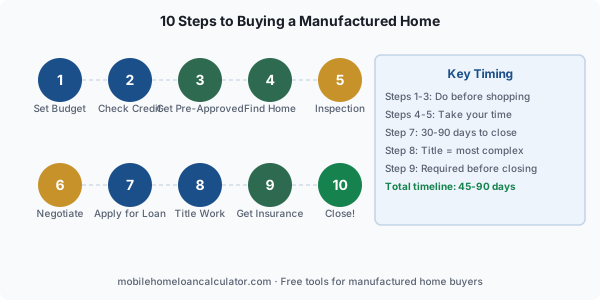
Buying a manufactured home sits somewhere between buying a car and buying a regular house. More paperwork than a car, different rules than a site-built house. The title work is its own thing, the inspection requirements are specific to manufactured housing, and the financing process looks different depending on which loan type you end up with. That's a lot of moving parts for a first-time buyer to keep straight.
The single most common mistake buyers make isn't picking the wrong lender or overpaying for a home. It's doing the right steps in the wrong order. Falling in love with a home before you know what you can actually finance. Skipping the inspection because the deal feels rushed. Signing title paperwork before insurance is bound. This checklist lays out the ten steps in the order they should happen, along with what to watch out for at each one.
Step 1: Know Your Real Budget (Including Everything)
Before you look at a single home, calculate your complete monthly housing cost — not just the loan payment.
Start with our mobile home loan calculator to estimate principal, interest, property tax, and insurance. Then add:
- Lot rent (if placing in a community): typically $350–$900/month
- Utilities: water, sewer, electric, gas
- HOA or community fees (some communities charge separately from lot rent)
- Maintenance reserve: budget $50–$150/month for a manufactured home
Most lenders cap your total housing expense at 35–43% of gross monthly income. On a $60,000/year salary ($5,000/month gross), that means $1,750–$2,150/month total for housing. Knowing this number before you shop saves you from falling in love with a home you can't finance.
Step 2: Pull and Review Your Credit Report
Get your free reports from all three bureaus at annualcreditreport.com. Look for:
- Errors or accounts you don't recognize (dispute immediately)
- Collections or late payments (especially recent ones)
- Your current FICO scores (need 580+ for FHA; 640+ for most chattel lenders)
If your score is below 640, take 60–90 days to improve it before applying. Pay down revolving balances below 30% of the limit. Don't open any new accounts during this period. A 30-point credit score improvement can save you 0.5%–1.5% on your rate — which translates to $10–$30/month and $3,000–$9,000 over the loan.
Step 3: Choose Your Loan Program and Get Pre-Approved
This step must happen before you fall in love with a specific home. Your loan type determines what homes you can even buy:
- VA loan (if eligible): No down payment; best rates; home must meet VA standards
- FHA Title II: Land ownership required; 3.5% down; best mortgage terms
- FHA Title I: Rented lot OK; 5% down; capped at $69,678
- Chattel loan: Rented lot; 10–20% down; higher rates
Get pre-approved (not just pre-qualified) from at least two lenders before making any offers. Pre-approval means a hard credit pull, income verification, and a conditional commitment — this gives you real buying power.
See our guides on FHA manufactured home programs and down payment requirements before choosing your program.
Step 4: Find the Home
Manufactured homes come from three main sources:
New homes from dealers: You pick floor plans, options, and have the home built to order. Prices for new single-wides start around $60,000; new double-wides run $100,000–$200,000+. Delivery and setup add $5,000–$20,000 depending on distance and site work.
Used homes on owned lots: Sold like conventional real estate through a real estate agent. These can be real property or personal property depending on how they're titled.
Used homes in communities: The home stays on the rented lot. You buy the home itself; the lot lease transfers. Often the cheapest entry point — prices start as low as $15,000–$40,000 for older single-wides, though financing options narrow for older homes.
Key things to check when evaluating any home:
- HUD certification label(s) — one per section, required for post-1976 homes
- Data plate inside the home (often in a cabinet) showing HUD number and build date
- Age of roof, HVAC, plumbing, and electrical systems
- Evidence of previous water damage (look at floors near plumbing, ceiling corners)
Step 5: Order a Professional Inspection
This is non-negotiable, even on new homes. A manufactured home inspector certified by the American Society of Home Inspectors (ASHI) or a similar organization knows what to look for:
- Foundation type and condition (pier-and-beam vs. permanent)
- Belly board integrity (the underfloor wrap that insulates and protects)
- Roof seals and penetrations (skylights, vents — common leak points)
- HVAC ductwork condition (runs under the floor in most manufactured homes)
- Tie-down/anchoring system (required in most states; inspected during setup)
- Electrical panel and wiring (older homes may have aluminum branch circuit wiring)
Inspections run $300–$500 and can save you from a $10,000–$30,000 surprise after closing. Never skip this step on a used home.
Step 6: Negotiate the Purchase Price
Manufactured home pricing is negotiable, especially for existing homes in communities. Common negotiating points:
- Asking seller to pay some or all closing costs
- Requesting repair credits for items found in inspection
- Negotiating delivery and setup costs on new homes (dealers often have margin here)
- Extended warranty or appliance package on new homes
Get any seller-paid costs in writing before you proceed to financing. Lenders need to see a signed purchase agreement to finalize your loan.
Step 7: Complete the Loan Application and Appraisal
With a signed purchase agreement, submit your full loan application. Your lender will order:
- Appraisal (for mortgages): A licensed appraiser values the home and land. HUD has specific appraisal guidelines for manufactured homes — the appraiser must be familiar with manufactured housing.
- Title search: Confirms the seller has clear title and there are no liens on the home.
- Foundation inspection (for FHA Title II): Must confirm HUD permanent foundation compliance.
This stage takes 2–4 weeks. Respond to any lender requests for documentation quickly — delays here push your closing date.
Step 8: Handle the Title (This Is Where Many Deals Get Complicated)
Manufactured home title work is different from site-built homes. The home may have a vehicle title (personal property) or a real estate deed (real property).
If buying as personal property: The seller transfers the vehicle title to you through your state's DMV or motor vehicle agency. This is similar to buying a car. Make sure the title is clear — no liens, correct owner name, correct VIN/HUD number.
If buying as real property (or converting): The vehicle title must be retired. A title company or real estate attorney handles this: the title is surrendered to the state, a deed is recorded, and the home becomes part of the real estate. This process takes 1–4 weeks.
Never close without confirming the title is clean and properly transferred.
Step 9: Get Insurance Bound Before Closing
Most lenders require you to have manufactured home insurance in place before they'll close. Unlike site-built home insurance, manufactured home insurance is a specialty product — standard homeowner's policies don't cover manufactured homes in most cases.
Get quotes from specialty insurers (Foremost Insurance, American Modern, Assurant) and make sure the policy covers:
- Replacement cost (not actual cash value — ACV policies leave you underinsured after depreciation)
- Wind and hail (critical if you're in a storm-prone area)
- Trip coverage for transport (only matters for new/relocated homes)
Our mobile home insurance cost guide walks through what coverage typically costs and what to look for in a policy.
Step 10: Close and Record
At closing, you'll sign loan documents, pay closing costs (typically $3,000–$8,000 for mortgages; $1,000–$3,000 for chattel loans), and receive the keys.
After closing:
- For chattel loans: Verify the vehicle title has been transferred to your name
- For real property mortgages: Verify the deed has been recorded with the county
- Set up your escrow account for property taxes and insurance if your lender requires it
- Confirm the home's setup, utility connections, and any required anchoring or skirting are complete
Congratulations — you're a manufactured homeowner. Calculate your total loan cost over time to track your equity progress and know when refinancing might make sense down the road.